
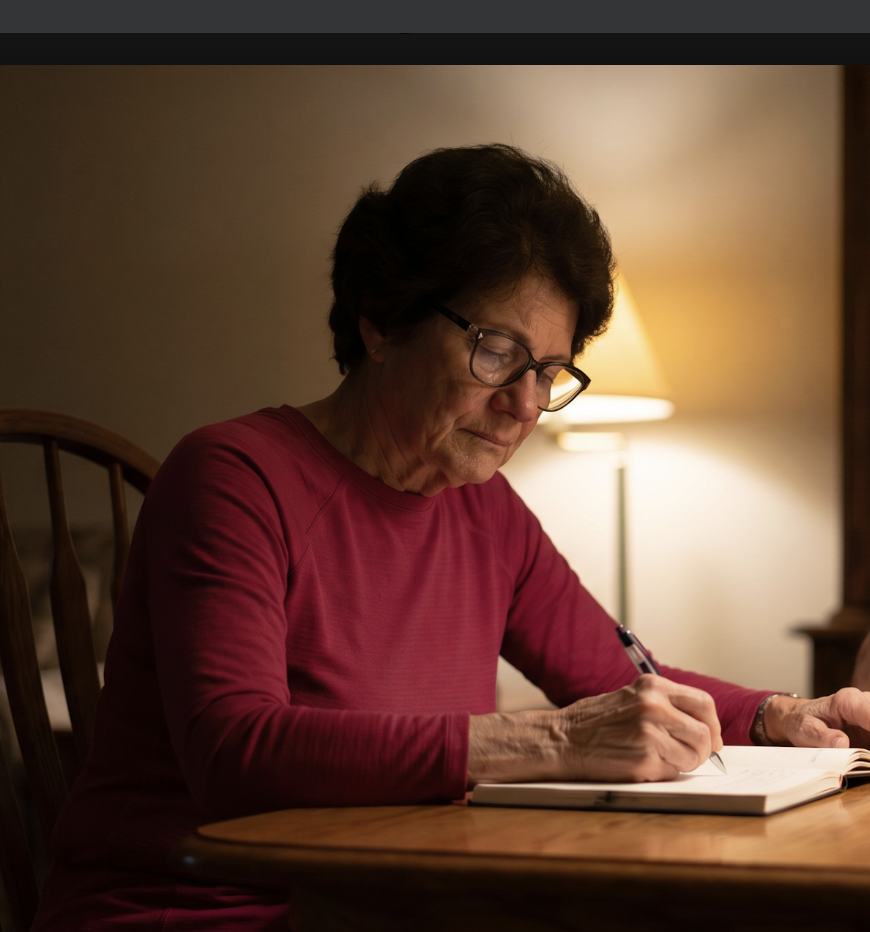
After the devastating loss of her husband Herb, Margaret Mandell’s sense of self split in two. To make matters worse, Herb was the one person who could have consoled her. She was stranded in the silence that envelops most of us in our time of such profound loss.
Death and loss is so gut wrenching, most of us avoid speaking about it altogether, lest it destroy our will to live. To protect our wounded spirits, sympathizers are warned against implying we understand. “I know how you feel” is even taken as an insult. “How dare you say such a rude, unfeeling thing?”
And so we are caught in a dilemma, saying nothing, and unsure even what to think. Our silence turns grief into an even lonelier experience than it needs to be.
In the 1960s, researcher Elisabeth Kubler Ross hoped to bring scientific reasoning to this tragic puzzle. As a pioneer in the field of death and dying, she observed five stages of grief to help explain what is going on. After all these years, many people rely on Kubler-Ross’s explanations to help them cope with their intense pain.
And yet, even though the five stages partially satisfy the need to explain grief, they fail to offer much heartfelt support. I’ve always felt that the stages-approach to grief might force people to reduce their vulnerable, raw feelings to a series of formulaic steps.
That leaves Western culture still seeking insight to help us reorient ourselves in moments of despair. When the emotions seem unfathomably deep, that is the exact moment when we could benefit most from words that remind us of the light.
One author’s solution to this age-old problem
Margaret Mandell figured out a brilliant solution to this dilemma. Since Herb was the one person in the world who could have consoled her, she began writing letters as if he was still alive. By pouring her heart out to him each day, she kept him close.
In each letter, she allowed her soul to share all the aspects of her grief. Instead of making the pain worse, writing offered relief. As her words poured onto the page, she was developing a sophisticated vocabulary to explain what she was feeling.
Her enhanced ability to express her feelings pulled her out of the darkness and opened her toward other people. Like a spelunker lost in a cave, she sensed that by following the fresh air offered by letter-writing, she might find her way back to the surface.
But she realized that a collection of letters would need considerable tailoring in order to be read by a larger audience. Her new goal was to reproduce her feelings in a language that would pull readers from the first page, through the epic journey of grief, to some resolution at the end. Rather than being daunted by the task, she felt energized by it.
She would need all the energy she could get, because to chronicle her journey in the form of a story, she had to return to memories most of us bury. But she didn’t have to face this journey alone. Herb was with her the whole way, in the form of those letters.
She had access to another source of support and camaraderie. Now that the Memoir Revolution has been going strong for a quarter of a century, a whole subculture has grown up to celebrate the storytelling power of ordinary life. To tap into the wisdom of this cultural movement, Margaret read memoirs, joined groups, took classes, read books about memoirs, and hired coaches.
Her commitment to this literary effort resulted in an excellent memoir which, in addition to being a good read and a great insight into the heart of a fellow human being, offers the rest of us a model of how to find our words during this critical transition.
Thanks to the popularity of memoirs, the widespread support for memoir writing, and individual accomplishments like And Always One More Time, our culture can finally emerge from its morbid silence about death and other taboo aspects of human experience. By continuing to honor the humble, hard work of self-expression by these ordinary people, we can all grow together to recognize the love, compassion, courage, and humanity that surrounds us, even during times when we suffer.
Notes:
Click here to see my previous article about how Margaret Mandell used writing to heal from grief.
List of excellent grieving memoirs
And Always One More Time by Margaret Mandell (Death of husband, journey in later life to reestablish her satisfying life in the world.)
Leaving the Hall Light On by Madeline Sharples (suicide of son, bipolar, mental health activism)
Losing Jonathan by Robert Waxler (death of son to drug overdose)
Life Touches Life by Lorraine Ash (still birth, spiritual resolution)
Losing Malcolm by Carol Henderson (loss of an infant son)
Angel in my Pocket by Sukey Forbes (death of 6-year-old daughter due to rare genetic disease)
Here if You Need Me by Kate Braestrup (husband and father of her young children dies in a car crash, and she must go on with her life and question her own belief in a compassionate universe.)
Leave a Reply